Peace Badejo, wearing sunglasses, looking to the left.

GovTech • Service Design

Safeer 2.0

Safeer 2.0

Transforming a complex government portal into a guided student service.

Transforming a complex government portal into a guided student service.

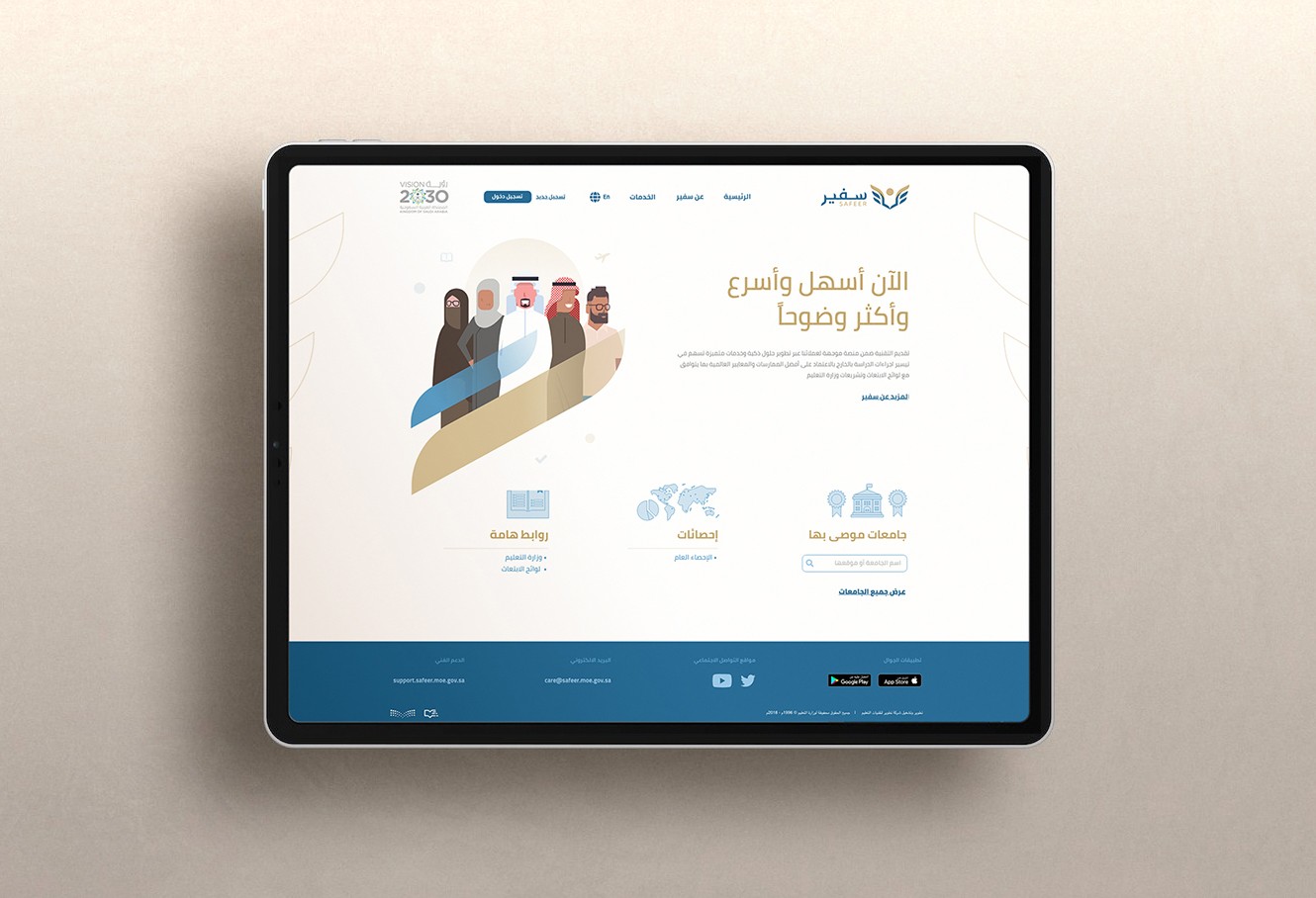
Safeer 2.0 supports Saudi students abroad, academic attachés, and ministry staff in managing scholarships and academic services. Despite its national importance, the platform was overwhelming, opaque, and process-driven. The redesign shifted Safeer from bureaucratic forms to guided, transparent journeys that empower students and reduce operational burden.
Role and Scope

Lead Product Designer:

  • Led service and UX design for a multi-role government platform

  • Reframed bureaucratic processes into user-centered journeys

  • Designed large-scale decision, action, and audit systems

  • Balanced student, attaché, and ministry needs

  • Worked within policy, compliance, and operational constraints

Key Outcomes

+60%

+60%

+60%

Self-Service completion

Self-Service completion

Increase in successful self-service submissions

-35%

-35%

-35%

Support Dependency

Reduction in support tickets

-45%

-45%

-45%

Request Processing Time

Average time from submission to decision

Design Impact

  • From Process to Experience: Shifted a government system from internal logic to user journeys

  • Emotional Clarity: Reduced feelings of confusion and abandonment in high-stakes academic scenarios

  • Operational Efficiency: Designed self-service flows that meaningfully reduced staff workload

  • Scalable Government UX: Created a reusable model for future digital government services

  • Trust Through Transparency: Made progress, ownership, and timelines visible by default

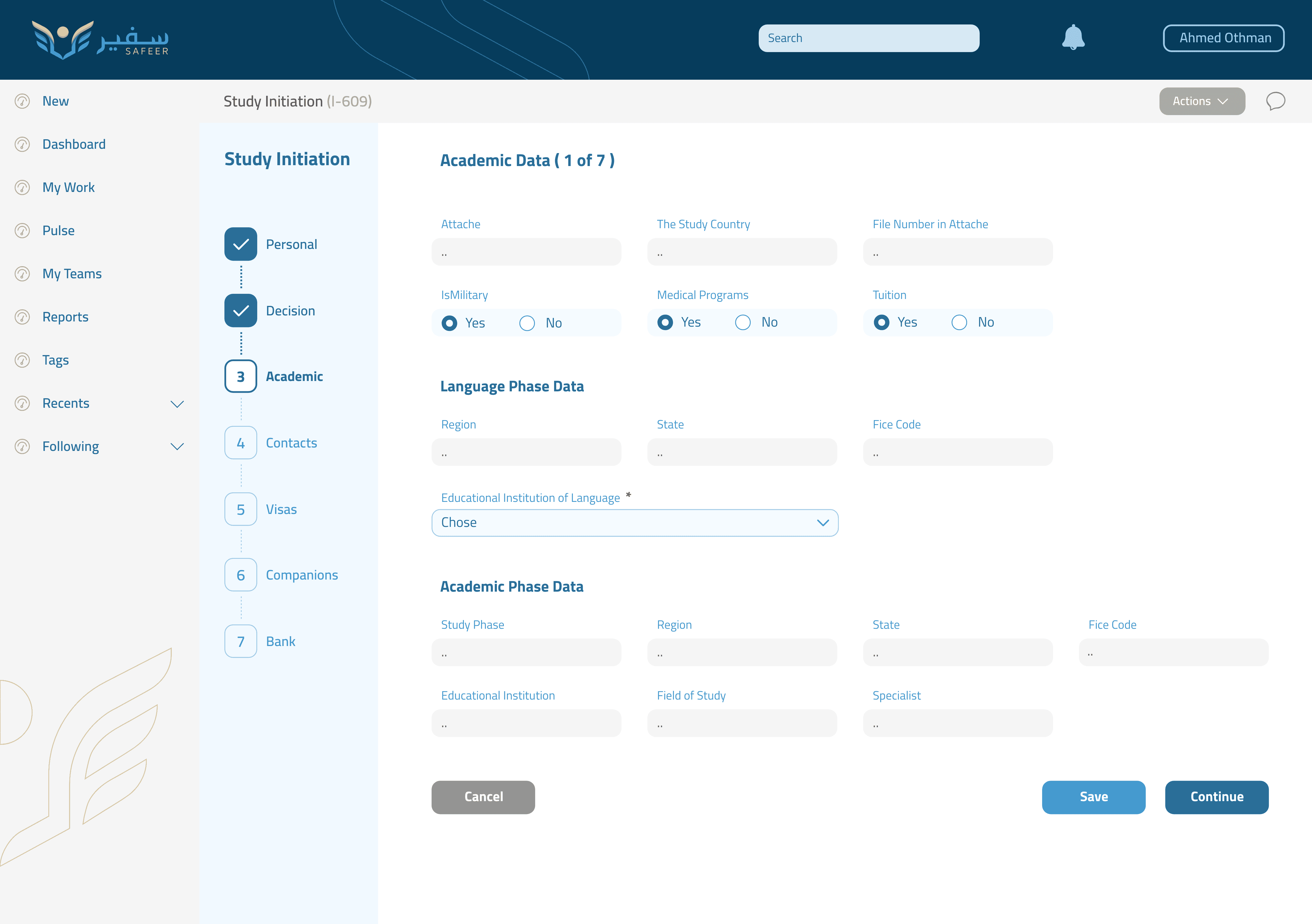
From Bureaucracy to Student Journeys

  • Step-based structure breaks down a complex scholarship process into manageable phases

  • Persistent progress indicator reduces anxiety and abandonment

  • Logical grouping of information (personal, academic, visas, companions, bank) mirrors real student needs

  • Smart defaults and binary inputs simplify high-stakes decisions

  • “Save” and “Continue” actions support long, real-world tasks without loss of progress

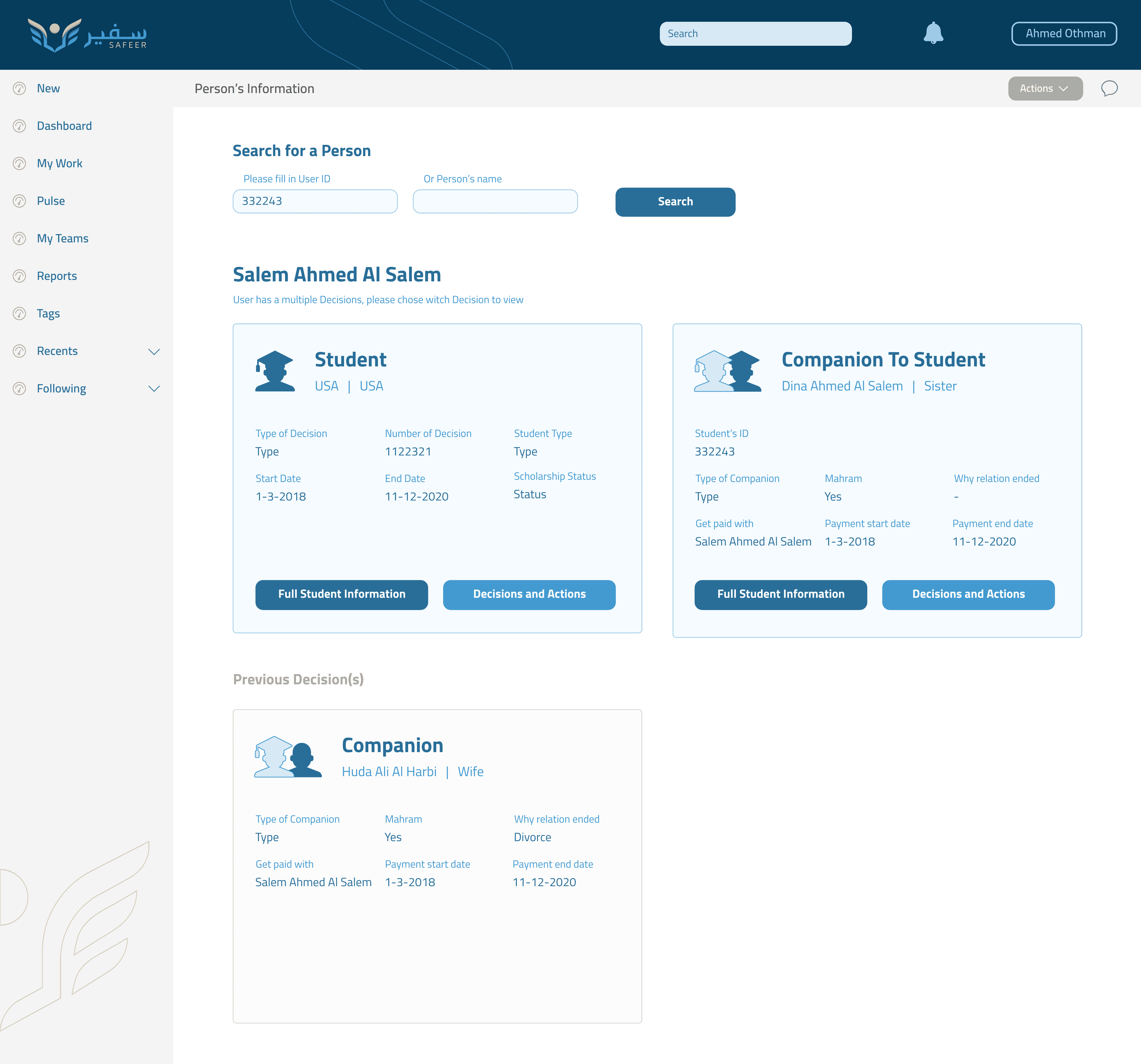
One Person, Multiple Decisions

  • Search supports both system-driven identifiers and human input (ID or name)

  • Student and companion entities are visually and structurally separated

  • Each card summarizes critical status at a glance: role, dates, eligibility, and payments

  • Historical decisions remain accessible without cluttering the current state

  • Primary actions (“Full Information”, “Decisions and Actions”) guide users to next steps

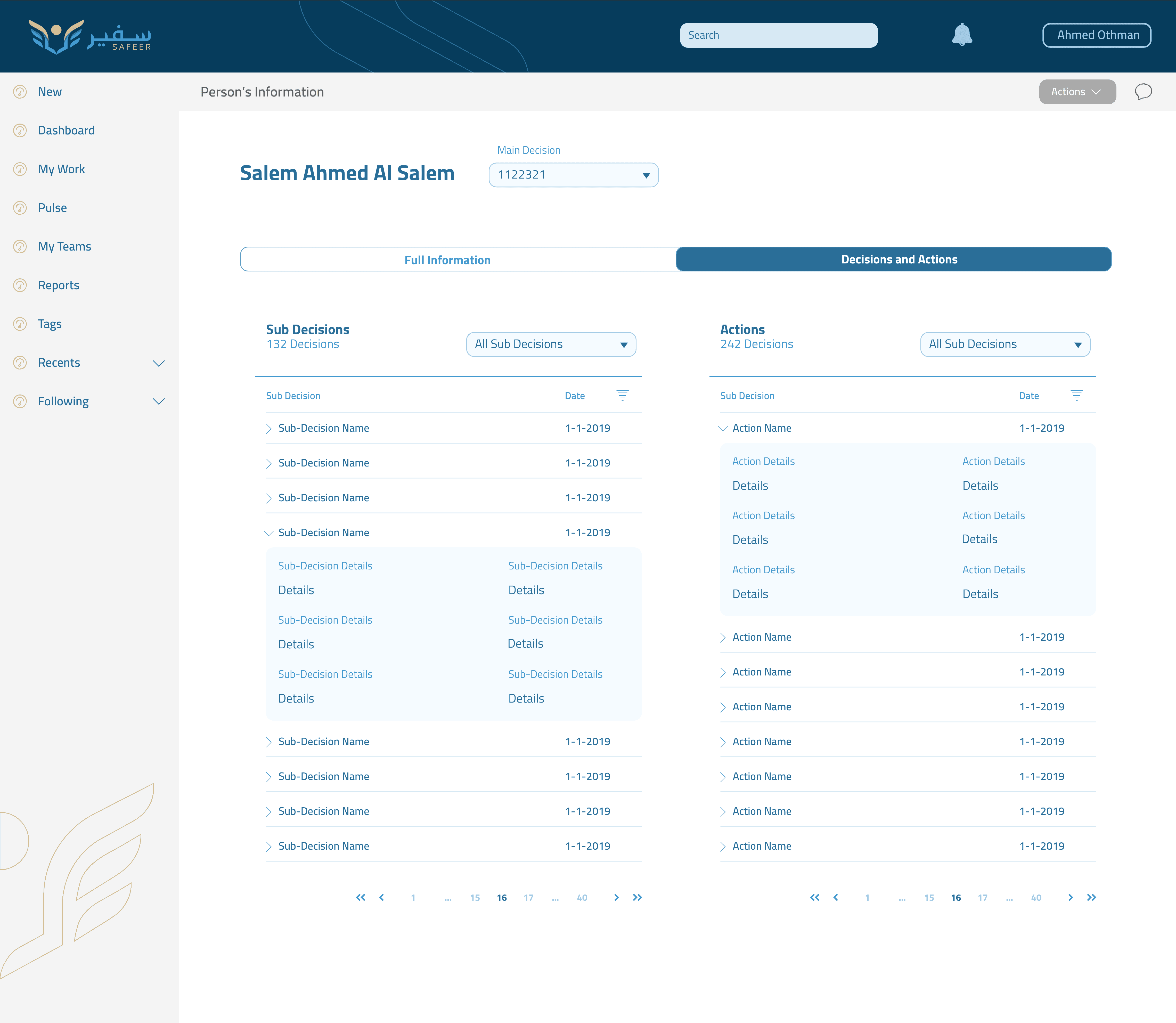
Decisions, Sub-Decisions & Actions at Scale

  • Main decision acts as an anchor for hundreds of related sub-decisions

  • Parallel columns distinguish what was decided from what was done

  • Expandable rows reveal details only when needed, preserving focus

  • Filters and pagination support long-term, high-volume use

  • Timeline-based organization supports audits and accountability

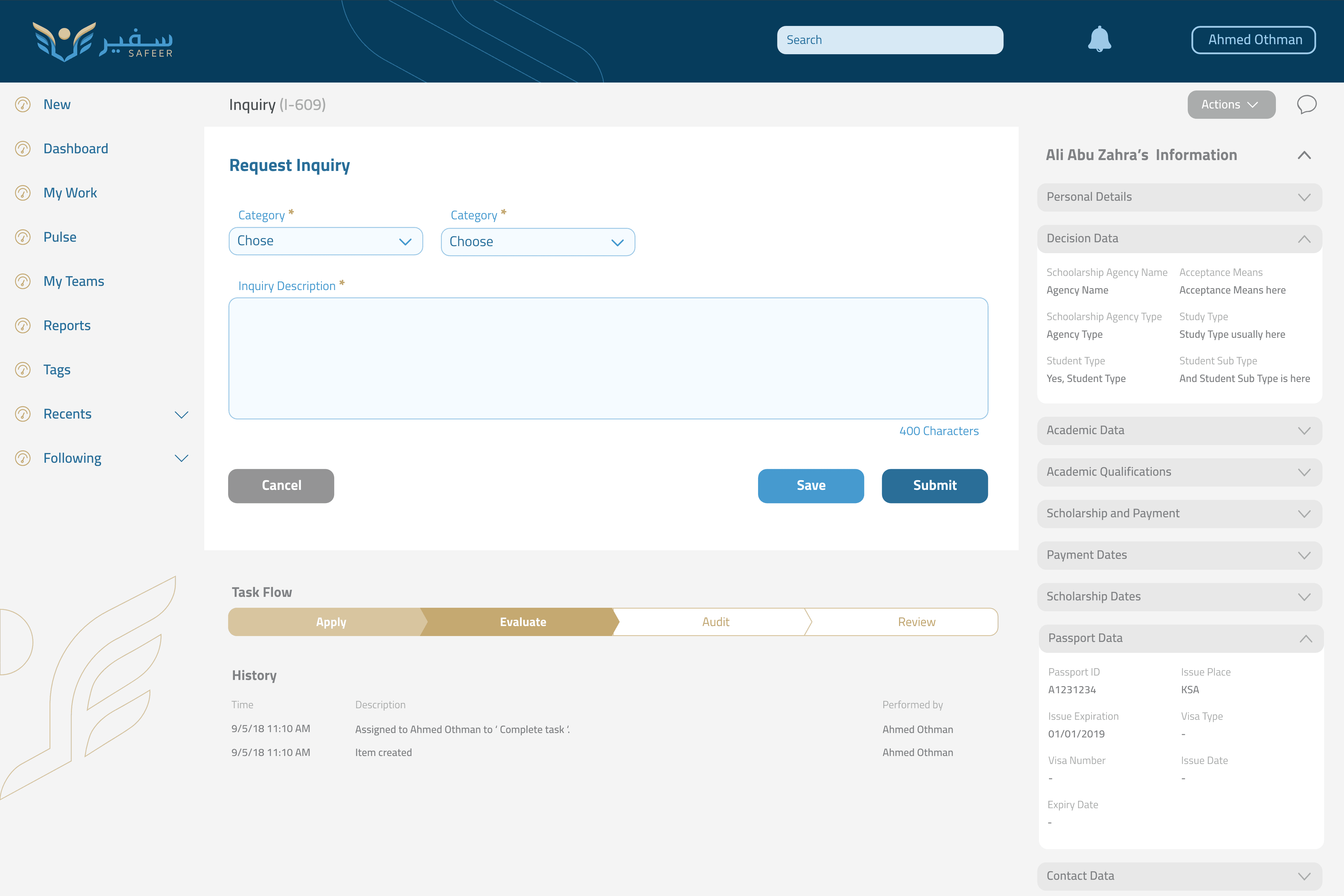
Guided Inquiries & Operational Workflows

  • Inquiry creation framed with clear categories to prevent misrouting

  • Contextual user information always visible, reducing back-and-forth

  • Explicit task flow (Apply → Evaluate → Audit → Review) sets expectations early

  • Save vs Submit supports real-world interruptions and partial completion

  • Full history log ensures accountability and transparency across teams

Optional Deep Dive

This is a showcase for Safeer 2.0 project, the full Case Study Includes:
  • User research with students, academic attachés, and support teams

  • Service mapping of end-to-end scholarship journeys

  • Reframing government processes into user-centered flows

  • Interaction and information architecture design for complex decision systems

  • Usability testing and iteration across multiple user roles

  • Alignment with operational, policy, and compliance constraints

Full Case study available upon request